Learning how to choose a web development agency is one of the most important decisions a UK small business owner will make. Your website is often the first impression potential customers get of your business, and in a crowded market, a slow, dated or confusing site sends visitors straight to a competitor. Get it right, and your website becomes one of your hardest-working assets — building trust, generating enquiries and growing alongside your business.
The challenge is that hundreds of agencies and freelancers across the UK offer web development, all promising excellent results. So how do you compare them fairly? This practical guide walks you through exactly how to choose a web development agency with confidence — from defining your goals to spotting the red flags before you sign anything.
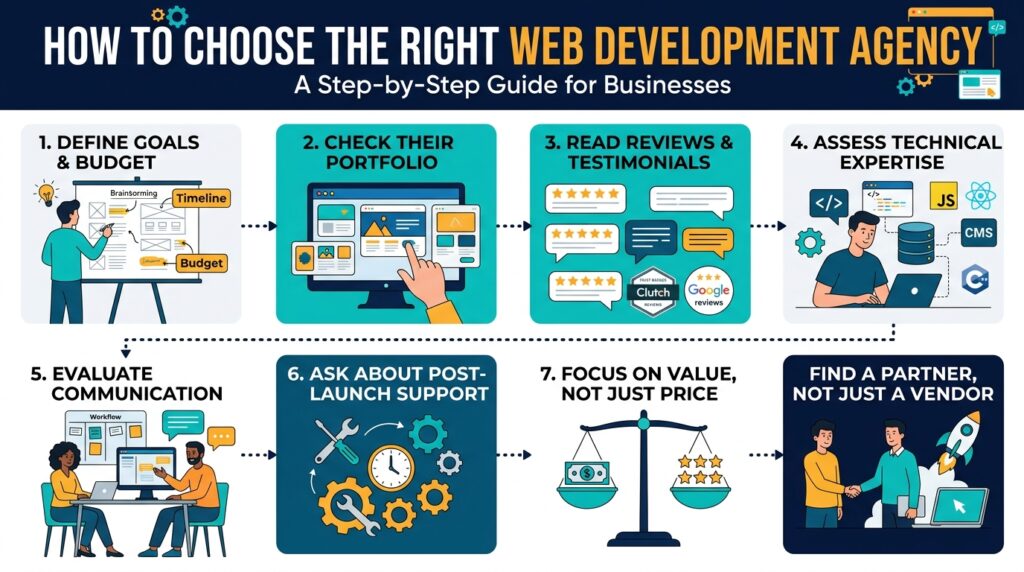
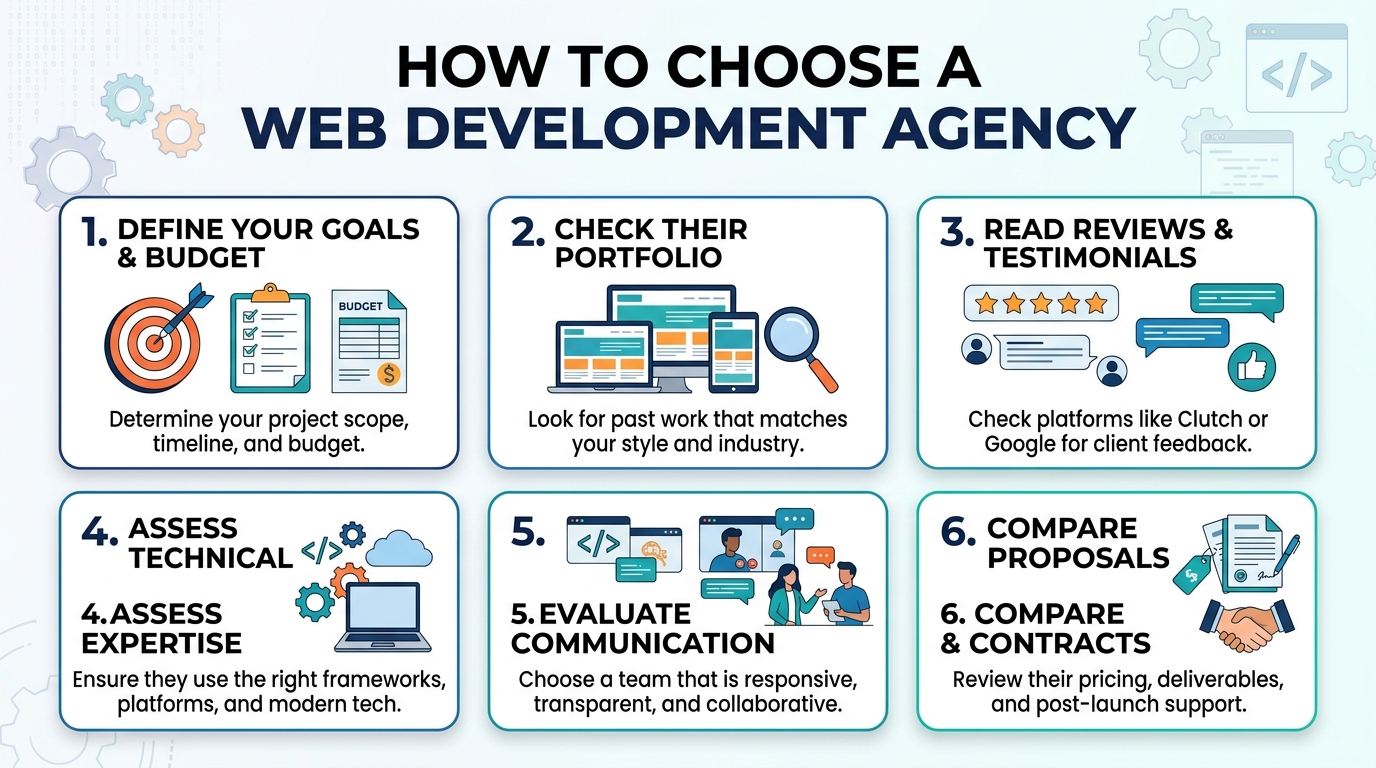
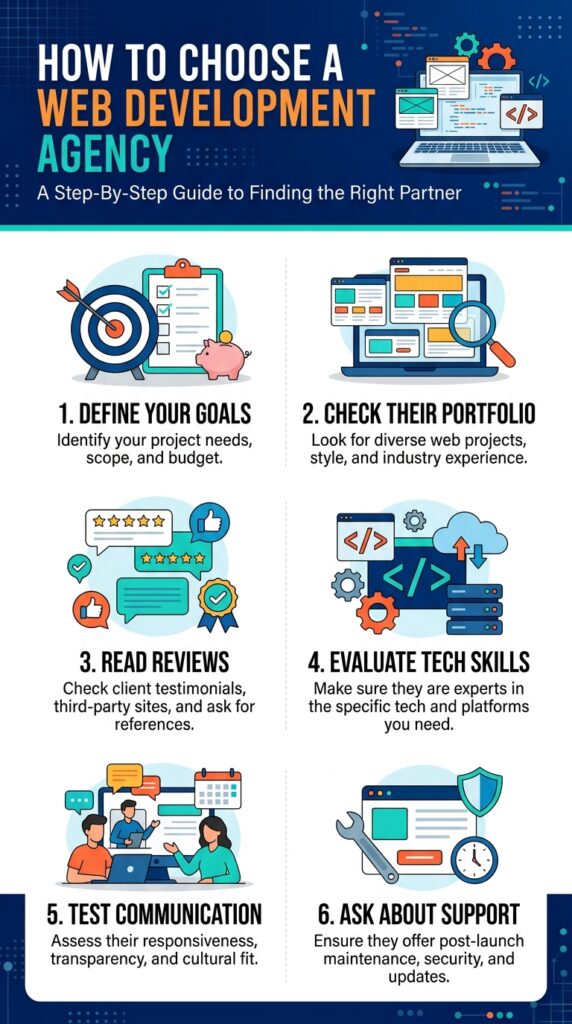
1. Start by Defining Your Needs and Goals
Before you request a single quote, write down what you want your website to achieve. Are you looking for a simple brochure site that builds credibility, an e-commerce store that sells while you sleep, or a booking system that takes appointments around the clock? The clearer your brief, the more accurate the quotes you receive — and the easier it is to compare agencies like for like.
Think about your must-have features: contact forms, online payments, a blog, or integration with your booking or CRM software. Also consider your budget range and your ideal launch date. An agency that understands your goals from day one is far more likely to deliver a website that actually performs, rather than one that simply looks attractive.
2. Review Their Portfolio and Track Record
A reputable agency should proudly show its work. Browse their portfolio and look for projects similar to yours in size and industry. Do the sites look modern and professional? Do they load quickly on your phone? Click through a few and ask yourself whether you would trust those businesses with your money.
Go further than screenshots. Ask what results the agency achieved for those clients — more enquiries, higher online sales, better Google rankings. Case studies with real numbers are far more convincing than pretty pictures alone. You can also check independent review platforms such as Clutch or Google Reviews to see what past clients say about communication, deadlines and value for money.
3. Insist on Transparent Pricing
One of the biggest frustrations small businesses face is vague pricing. A trustworthy agency will explain what is included in the quote, what costs extra, and what the ongoing costs look like — hosting, domain renewals, maintenance and future updates.
Be wary of quotes that seem unusually cheap with no breakdown; they often grow later or cut corners on essentials like mobile optimisation and security. Equally, the most expensive option is not automatically the best. Ask for an itemised proposal so you can compare agencies fairly, and make sure you understand whether you are paying a fixed project fee or an hourly rate.
4. Confirm Who Will Own Your Website
This is a step many business owners overlook until it is too late. Before work begins, get it in writing that you will own your domain name, your website files, your content and your data. Some agencies register domains in their own name or build sites on proprietary platforms that make it difficult — or expensive — to leave.
Ask for full admin access to your website and hosting from the start, and check what happens if you decide to move to another provider. A confident, honest agency will have no problem handing over the keys, because it earns your continued business through good service, not lock-in.
5. Ask About Ongoing Support and Maintenance
A website is never truly “finished”. Software needs updating, security patches need applying and content needs refreshing. Ask every agency what happens after launch: do they offer a maintenance plan, and what does it cover? How quickly do they respond if something breaks?
For a small business without an in-house technical team, reliable aftercare is often more valuable than a flashy design. Look for clear response times, regular backups and a straightforward way to request small changes. An agency that disappears the moment the final invoice is paid is one to avoid.
6. Evaluate Their Communication and Process
Pay close attention to how an agency communicates before you become a client — it rarely improves afterwards. Do they reply promptly? Do they explain technical concepts in plain English? Do they ask thoughtful questions about your business, or simply push a standard package?
A professional agency will outline a clear process: discovery, design, development, testing and launch, with milestones where you review and approve the work. You should know who your point of contact is and how progress will be reported. Good chemistry matters too; you will be working closely together, so choose people you feel comfortable questioning and challenging.
7. Red Flags to Watch for When Choosing a Web Development Agency
Keep an eye out for these warning signs:
- No portfolio, or only mock-ups rather than live websites you can visit
- Vague pricing with no written breakdown of costs
- Promises of guaranteed number-one Google rankings
- Pressure to sign immediately or “limited-time” discounts
- No proper contract, or unclear terms about who owns the site
- Slow or dismissive communication during the sales process
If you spot more than one of these, keep looking. The right agency will be transparent, patient and happy to answer difficult questions.
Frequently Asked Questions
How much does a small business website cost in the UK?
A simple brochure website typically costs between £1,000 and £5,000, while e-commerce or custom-built sites can range from £5,000 to £20,000 or more. The final price depends on the number of pages, design complexity, functionality and content. Always get an itemised quote so you know exactly what you are paying for.
How long does it take to build a website?
Most small business websites take four to eight weeks from brief to launch, depending on complexity and how quickly you provide feedback and content. Be cautious of anyone promising a full custom site in a couple of days — quality work takes time.
Should I hire a freelancer or a web development agency?
Freelancers can be a good fit for very small projects with tight budgets. However, an agency typically offers a broader skill set — design, development, SEO and ongoing support — plus continuity if one team member is unavailable. For most growing businesses, an agency is the safer long-term choice.
What questions should I ask before hiring a web development agency?
Ask to see relevant portfolio work, request an itemised quote, confirm who owns the website and domain, clarify what support is included after launch, and ask how they measure success. Their answers will tell you a great deal about how they work.
Final Thoughts: Choose a Partner, Not Just a Supplier
Knowing how to choose a web development agency comes down to doing your homework: define your goals, compare portfolios, demand transparent pricing, secure your ownership rights and look for an agency that communicates well and supports you after launch. The cheapest quote is rarely the best value — the best value comes from a website that works hard for your business for years to come.
If you would like honest, jargon-free advice about your next website, the team at Prime X Agency would love to help. Get in touch for a free, no-obligation consultation and let’s talk about what your business really needs.