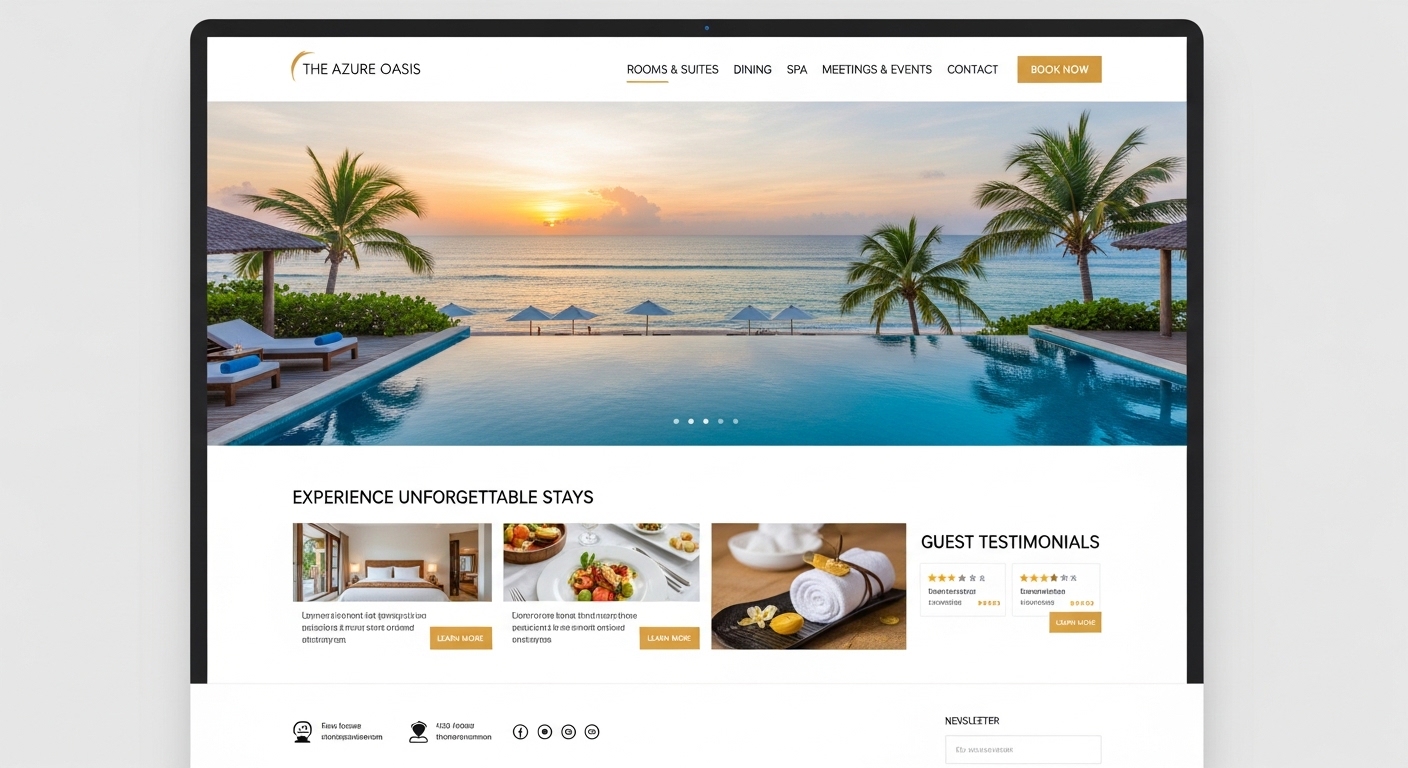
Imagine you’ve just spent six hours traveling. You’re tired, your phone battery is at 4%, and all you want is a soft bed and a warm shower. You pull up a hotel’s website on your phone. If that site takes forever to load, hides the “Book Now” button, or looks like it was designed in 1998, how do you feel? You feel frustrated. You probably leave and find another place to stay. That is the power of hospitality web design. In the travel industry, your website isn’t just a brochure; it is your digital front desk. It is the first handshake, the first smile, and the first “welcome” your guest receives. If the digital experience is clunky, guests assume the physical experience will be too.
The Heart of the Digital Welcome
When we talk about hospitality web design, we aren’t just talking about pretty pictures. We are talking about user experience (UX). A great website should feel like a five-star concierge—it anticipates what you need before you even ask. Take “Sarah,” for example. Sarah is planning a honeymoon. She is looking for something romantic, easy to navigate, and trustworthy. She lands on a boutique hotel site that uses high-resolution video backgrounds of a sunset over the ocean. Within three seconds, she sees a clear online booking engine. She doesn’t have to hunt for the price or the amenities. Because the web design for hotels was handled with care, Sarah feels a sense of relief. She trusts the brand. She clicks “Reserve.” In this guide, we will walk through how to build a website that doesn’t just sit there but actually works to fill your rooms and tables.
Phase 1: Planning Your Visual Narrative
Before you touch a single line of code or pick a font, you need a story. In the world of tourism website development, the story is everything.
1. Know Your Audience
Are you a high-energy hostel for backpackers or a quiet retreat for executives? Your brand identity must dictate your design choices.
- Backpackers: Use vibrant colors, social media feeds, and bold call-to-action (CTA) buttons.
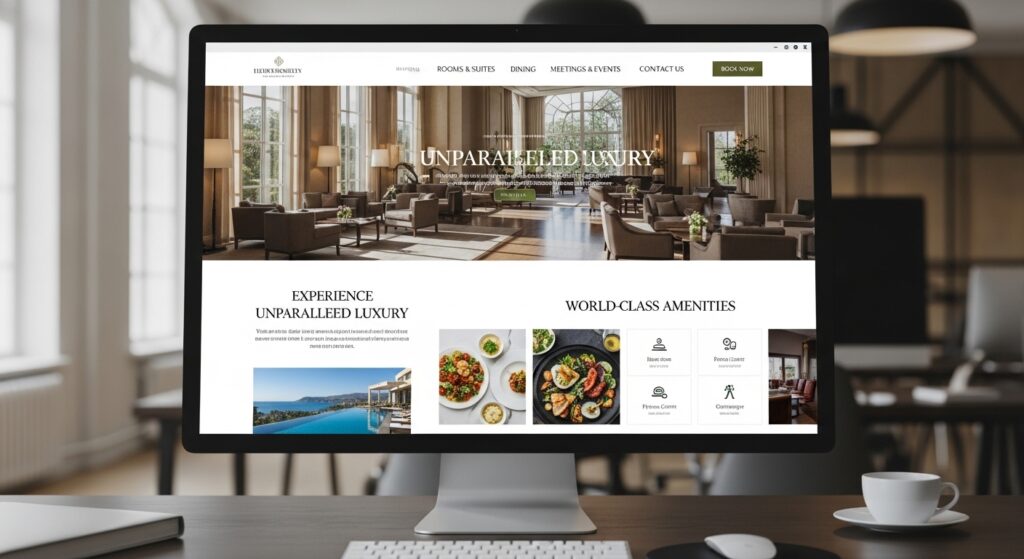
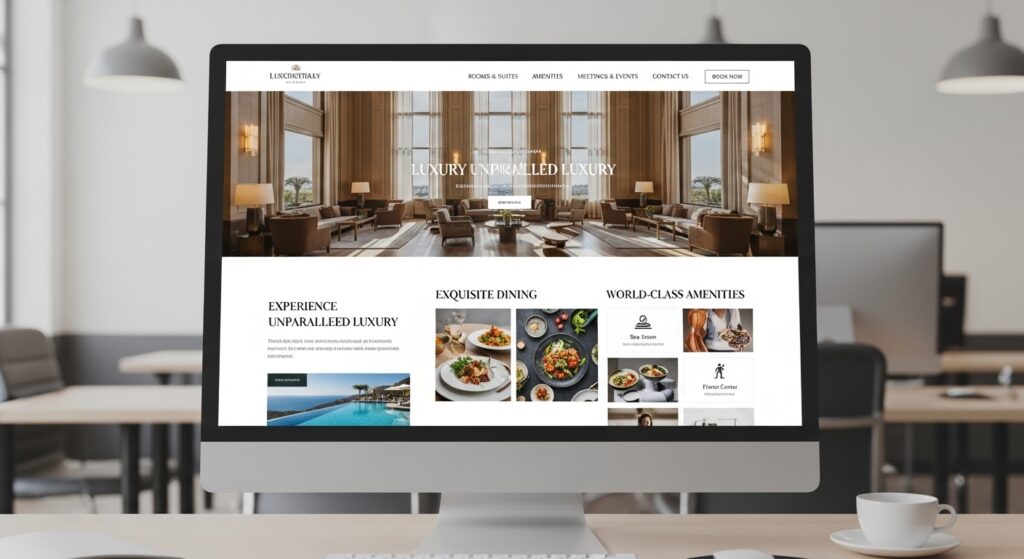
- Luxury Seekers: Use plenty of “white space,” elegant serif fonts, and professional photography.
2. Mobile-First Approach
Most travelers book on the go. If your responsive web design isn’t perfect on a smartphone, you are losing more than half of your potential revenue. A mobile-friendly interface ensures that buttons are easy to tap with a thumb and text is readable without zooming in.
Phase 2: The Essential Features of Hospitality Sites
To turn a visitor into a guest, your site needs specific “machinery” under the hood.
High-Quality Imagery and Video
You are selling an experience, not just a room. Using a Professional Gallery is non-negotiable. However, ensure your images are optimized. Huge files slow down your page load speed, which kills your Search Engine Optimization (SEO).
Direct Booking Integration
Why pay high commissions to third-party sites? A seamless direct booking system allows you to keep 100% of the profit. This system should be:
- Simple: Fewer than three steps to confirm.
- Secure: Use SSL Certificates to protect guest data.
- Transparent: No hidden fees shown at the very last second.
Social Proof and Reviews
Humans are social creatures. We want to know that others enjoyed their stay. Integrating TripAdvisor Widgets or a live Instagram feed builds immediate credibility and trust.
Phase 3: A Step-by-Step Guide to the Design Process
If you are ready to revamp your hospitality web design, follow these steps to ensure you don’t miss the mark.
Step 1: Mapping the User Journey
Map out every click. From the moment they land on the homepage to the “Thank You” page after booking, the path should be a straight line. Avoid “pop-up” distractions that pull them away from the conversion funnel.
Step 2: Content Strategy and SEO
You need to be found before you can be booked. Use local SEO strategies to ensure that when someone searches for “best hotels in [Your City],” you appear.
- Use semantic keywords like “luxury accommodation,” “vacation rentals,” and “guest services.”
- Write a blog about local attractions. This makes you a Local Authority in the eyes of Google.
Step 3: Choosing the Right Platform
Should you use WordPress, Squarespace, or a custom-built solution?
- WordPress offers the most flexibility for hospitality web design because of its endless Plugins.
- Custom Builds are better for large resorts that need deep integration with Property Management Systems (PMS).
Step 4: Testing and Optimization
Before going live, perform A/B Testing. Try two different colors for your “Book Now” button. You might find that a red button gets 10% more clicks than a blue one. In the world of conversion rate optimization (CRO), small changes lead to big profits.
Phase 4: Beyond the Room – Food and Beverage Design
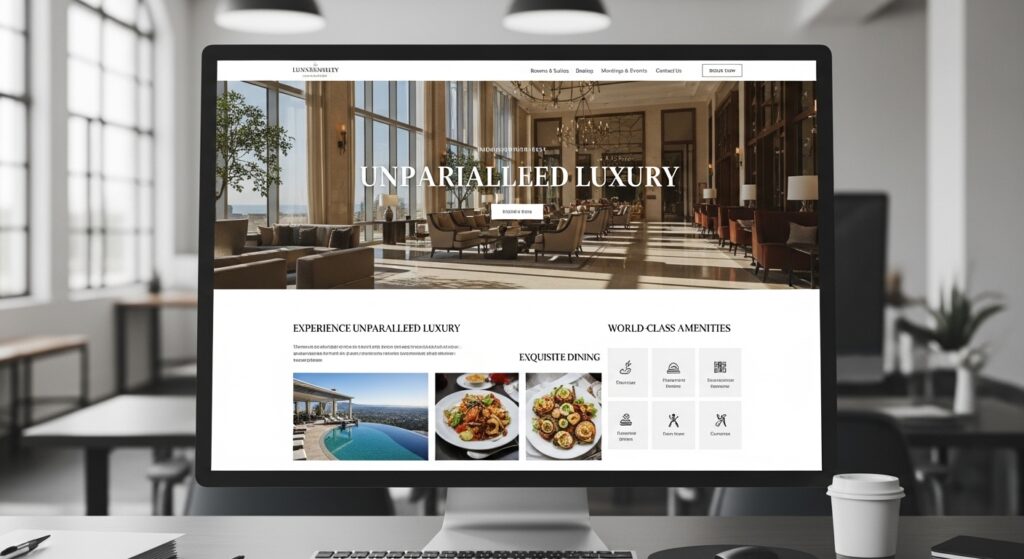
If your hospitality business includes a restaurant, your restaurant web design needs its own focus.
- Digital Menus: Ensure your menu is Mobile-Responsive text, not a clunky PDF that people have to download.
- Reservation Links: Use tools like OpenTable or Resy to allow instant table booking.
- Visual Appetite: Use “food porn” photography. High-contrast shots of your signature dishes will trigger a physical hunger response in your visitors.
The Psychology of Conversion: Why Good Design Sells
Why does hospitality web design actually convince people to buy? It’s about reducing “cognitive load.” When a site is messy, our brains get tired. When we are tired, we say “no.” When a site is clean, fast, and intuitive, it creates a “halo effect.” The guest thinks, “If they cared this much about their website, imagine how much they will care about my stay.” This builds customer loyalty before they’ve even checked in. Furthermore, using clear typography and intuitive navigation removes the barriers to purchase. You want to make it so easy to buy that the guest doesn’t have time to second-guess their decision.
The Future: AI and Personalization
As we move forward, hospitality web design is becoming smarter.
- Chatbots: AI-powered Chatbots can answer “Is the pool heated?” at 3:00 AM without a human staff member being awake.
- Dynamic Pricing: Showing different offers based on the user’s location or previous visits.
- Virtual Tours: Using 360-degree Video to let guests “walk through” the suite before they pay.
Why You Should Invest Now
The digital landscape is more competitive than ever. Your competitors are likely updating their online presence right now. By investing in professional hospitality web design, you aren’t just buying a website; you are buying an automated sales machine that works 24/7. Ready to transform your business? Our team specializes in creating high-converting, beautiful, and fast websites specifically for the hospitality sector. We understand the nuances of guest behavior and the technical requirements of modern web standards. Don’t let another potential guest bounce away to a competitor. Build a digital home that is as welcoming as your physical one. With our proven track record in hospitality web design, we can help you increase direct bookings, reduce reliance on expensive OTAs, and tell your brand’s unique story.
