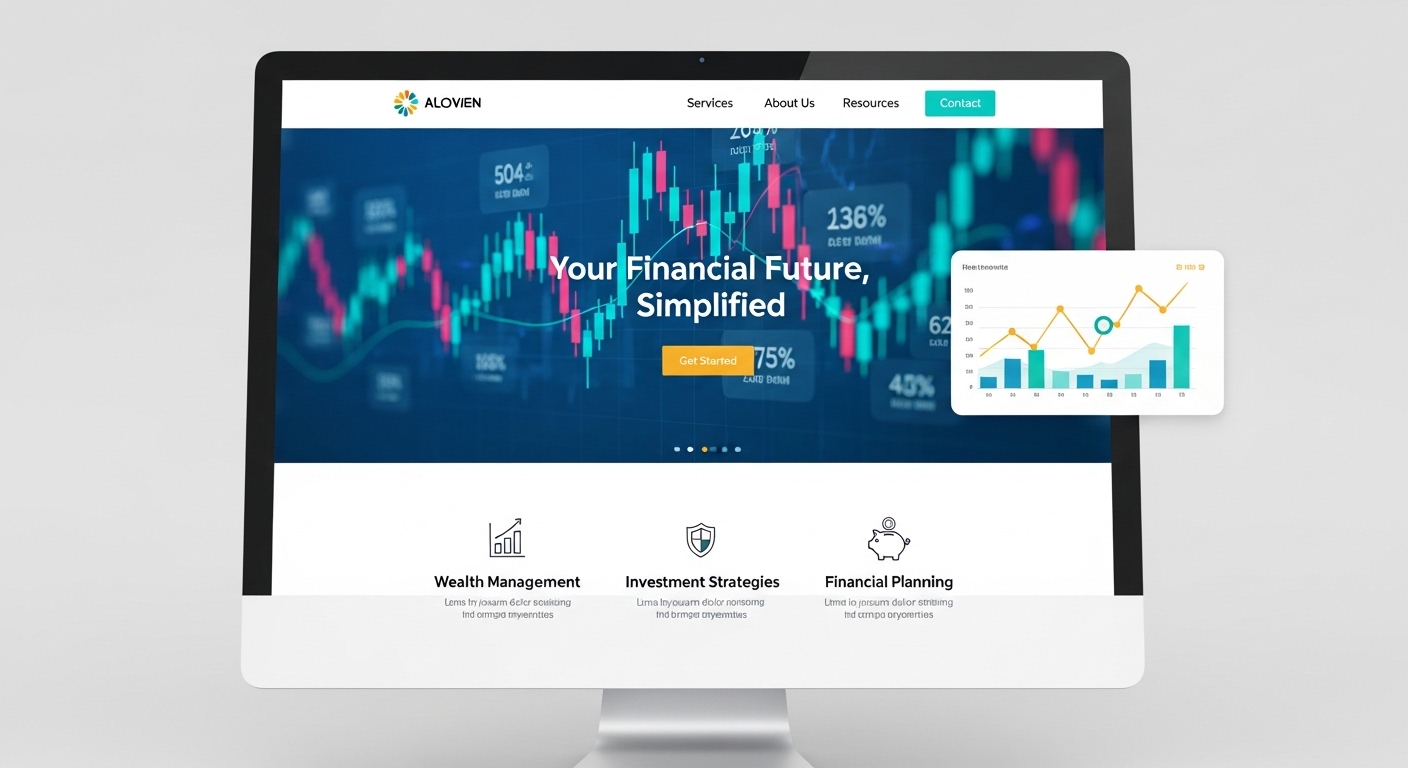
In the world of finance, a first impression isn’t just about looking “fancy”—it’s about looking dependable. Imagine walking into a physical bank. If the floors were sticky, the signs were handwritten in crayon, and the vault was left slightly ajar, you’d probably turn around and run. In the digital age, your website is that physical branch. Financial web design is the art and science of creating a digital space where people feel safe enough to trust you with their hard-earned money. Whether you are a solo accountant, a growing fintech startup, or a regional credit union, your website needs to be your hardest-working employee.
Why Quality Design is Your Secret Sales Force
I once worked with a local financial advisor named Sarah. She was brilliant—she could explain the complexities of compound interest in a way that made a five-year-old understand it. However, her website looked like it was built in 1998. It had tiny text, broken buttons, and zero photos of her team. Sarah was losing clients to “Robo-advisors” because, even though she was better at her job, her website screamed “outdated.” After we overhauled her financial web design, focusing on clarity and professional imagery, her lead conversion rate jumped by 40% in just three months. The lesson? People don’t buy financial products; they buy confidence.
The Pillars of Great Financial Web Design
When we talk about financial web design, we aren’t just talking about choosing a nice shade of blue. It involves several critical layers that work together to create a seamless user experience. Consequently, failing in one area can compromise the entire site’s integrity.
1. Security You Can See
If a user sees a “Not Secure” warning in their browser while looking at your loan rates, they are gone immediately. Use SSL certificates and display trust badges from security providers. Furthermore, ensure your privacy policy is easy to find, as transparency is the cornerstone of financial web design.
2. Mobile-First Approach
Most people check their balances or look for financial advice on their phones while waiting for coffee. If your financial web design doesn’t work perfectly on a smartphone, you are essentially closing your doors to half of your potential customers. This is called responsive design. Since Google also prioritizes mobile-friendly sites, this is essential for your search engine rankings.
3. Clear Navigation
Finance is confusing enough. Your website shouldn’t be a maze. Use simple headings like “Services,” “About Us,” and “Contact.” Avoid industry jargon in your menu. Instead of “Fiduciary Wealth Management Strategies,” maybe just use “Investment Planning.” In addition, a search bar can help users find specific documents or calculators quickly.
Step-by-Step Guide to Planning Your New Site
Building a website can feel overwhelming, but if you break it down, it’s quite manageable. Here is how you can approach your financial web design project systematically:
Step 1: Define Your Goal Are you trying to get people to sign up for a newsletter, download a mortgage calculator, or book a consultation? Every page should have one clear call to action.
Step 2: Map the User Journey Think about a new visitor. They land on your homepage. What is the first thing they need to see to feel comfortable? Usually, it’s a clear statement of what you do and who you help. Use a sitemap to visualize the flow before any coding begins.
Step 3: Content is King, but Layout is Queen Write your content in plain English. Use bullet points and short paragraphs. In financial web design, “white space” (the empty space between sections) is your friend. It gives the reader’s eyes a break and makes the information feel less intimidating. Moreover, using typography that is legible on all screens is vital.
Step 4: Choose the Right Visuals Avoid cheesy stock photos of people in suits shaking hands. Use real photos of your office, your team, or your community. High-quality visual hierarchy helps guide the user’s eye to the most important parts of the page, such as your “Open Account” button.
Step 5: Testing and Launch Before going live, ask someone who isn’t a “techie” to try and find your contact form. If they struggle, your financial web design needs more work. Once you are satisfied, perform a speed test to ensure fast loading times.
The Power of Social Proof
In the financial world, what you say about yourself matters far less than what your clients say about you. Integrating testimonials and case studies into your financial web design is non-negotiable. Think about it: would you go to a restaurant that had zero reviews? Probably not. Would you give $50,000 to an investment firm that doesn’t have a single “Success Story” on their site? Definitely not. Therefore, showcasing client logos or video reviews can drastically increase your conversion rates.
Semantic SEO: Helping People Find You
Having a beautiful site is useless if nobody can find it. By using financial web design techniques that are SEO-friendly, you ensure that Google knows exactly what you offer. This means using headers correctly (H1, H2, H3), optimizing your images so they load fast, and writing meta descriptions that entice people to click. Additionally, focusing on local SEO helps you appear when neighbors search for “financial services near me.”
Why You Should Invest Today
The digital landscape is getting crowded. If your competitors have a modern, sleek, and fast website and you don’t, you are losing money every single day. Good financial web design isn’t an expense; it’s an investment that pays dividends for years. When you invest in a professional design, you are telling the world that you are modern, secure, and that you care about your clients’ experience. For instance, a site that loads in under two seconds can reduce bounce rates significantly.
Final Thoughts
Ready to take your business to the next level? Don’t let a clunky website hold you back. High-quality financial web design bridges the gap between your expertise and your client’s needs. It is time to build a digital home that reflects the excellence of your financial services. Whether you’re looking to boost your brand identity or drive more sales, a well-designed website is the key. Take the leap today with confidence; your clients—and your bottom line—will thank you.
