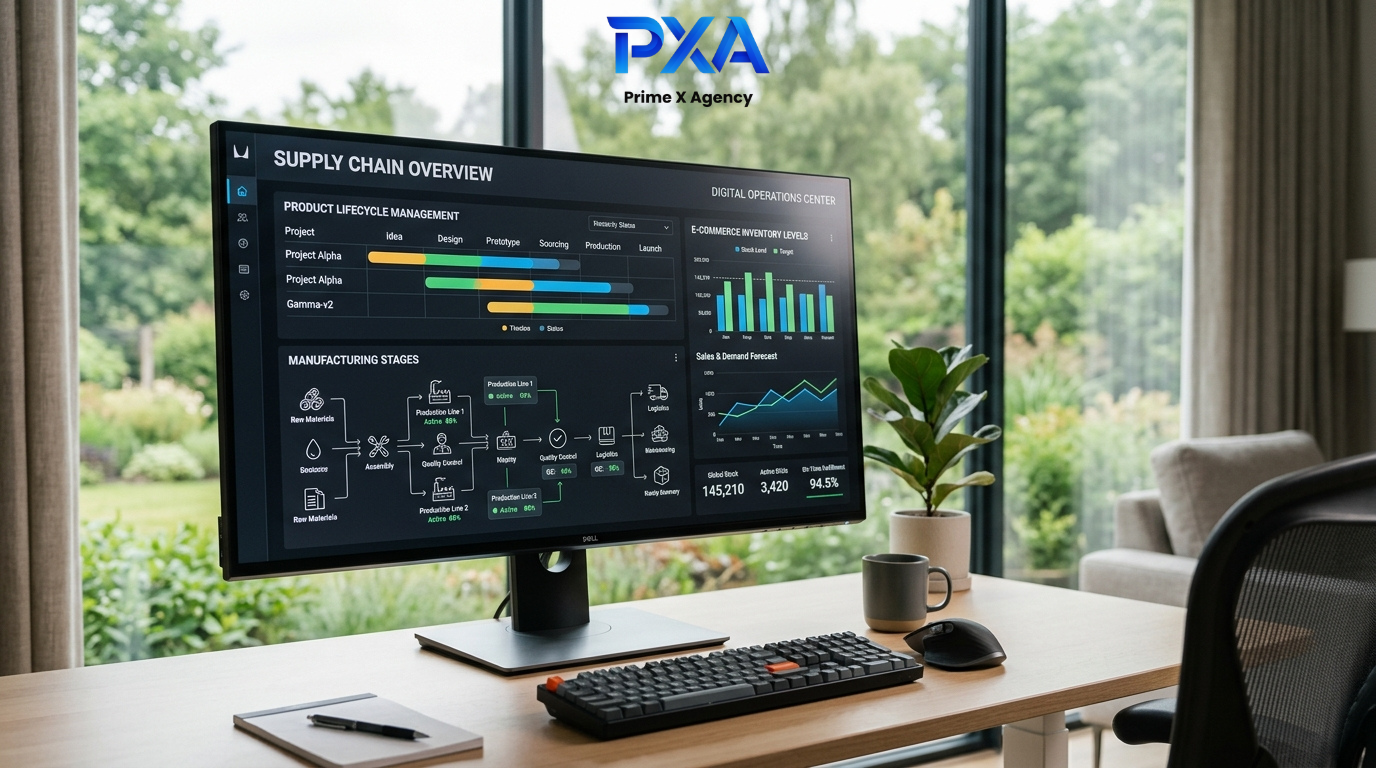
B2B e-commerce solutions product lifecycle management has evolved from a niche operational requirement into the central nervous system of modern wholesale and distribution businesses. In the complex world of business-to-business transactions, companies can no longer afford to treat their digital storefront and their supply chain data as completely separate entities.
By integrating robust B2B e-commerce solutions product lifecycle management strategies, organizations ensure that every stage of a product’s journey—from initial concept and manufacturing to catalog listing, sales, and eventual phase-out—is synchronized, transparent, and driven entirely by data.

The Synergy of B2B E-commerce and Lifecycle Data
When your B2B e-commerce solutions product lifecycle management framework is correctly aligned, you eliminate the “information silos” that frequently plague large organizations.
Imagine a scenario where your marketing team lists a product as “In Stock” on your B2B portal, but your production team has already flagged it for discontinuation due to component shortages. Without integrated B2B e-commerce solutions product lifecycle management, this disconnect leads to customer frustration, manual order cancellations, and damaged trust. With a unified system, your digital storefront updates automatically the exact moment a product status changes in the backend.
Why Integration is No Longer Optional
| Strategic Advantage | Integration Impact | Business Outcome |
| Real-Time Inventory Synchronization | Links backend lifecycle data directly with your front-end store. | Ensures B2B buyers see 100% accurate availability, pricing, and technical specifications at all times. |
| Enhanced Customer Experience | Provides comprehensive product history and documentation via the integration. | Speeds up the buyer’s internal decision-making process by giving them the exact data they need without calling a rep. |
| Operational Efficiency | Triggers automatic updates to massive catalogs. | Reduces the need for manual data entry, minimizes human error, and allows the business to scale rapidly. |
A Strategic Approach to Implementation
To leverage B2B e-commerce solutions product lifecycle management effectively, your business must view it as a continuous cycle rather than a one-time setup.
1.Data Centralization:Establish a single source of truth.
The first step of any successful B2B e-commerce solutions product lifecycle management project is establishing a centralized data hub. All product data—including CAD files, technical specifications, dynamic pricing tiers, and compliance documents—must reside here and feed directly into your e-commerce platform.
2.Workflow Automation:Define lifecycle triggers.
Define clear operational triggers for each stage of the lifecycle. When a product moves from “Development” to “Released,” your system should automatically push the listing to your online store equipped with pre-defined marketing content.
3.Collaborative Ecosystems:Share transparent roadmaps.
Use your platform to share lifecycle updates not just with your internal sales team, but with your authorized external distributors and partners. Total transparency regarding product roadmaps is a massive value-add in long-term B2B relationships.
4.Feedback Loops:Inform R&D with buyer data.
Use the data gathered from your B2B e-commerce solutions product lifecycle management suite to inform future product development. If your e-commerce search logs show that buyers are frequently looking for features that current models lack, feed that data directly back into your R&D lifecycle.
The Future of B2B Retail
The landscape of 2026 is defined by speed and precision. Companies that successfully master B2B e-commerce solutions product lifecycle management gain a massive competitive advantage. They spend significantly less time managing data inconsistencies and far more time actually serving their customers and innovating new products.
Whether you are looking to integrate your existing ERP with a headless e-commerce frontend or you are building a custom distribution platform from scratch, the integration of B2B e-commerce solutions product lifecycle management is the critical factor that determines how quickly you can bring products to market and how reliably you can fulfill massive orders.
By prioritizing this integration, you aren’t just building a website; you are building a resilient, highly intelligent digital infrastructure that supports the intense complexity of modern business trade.
